
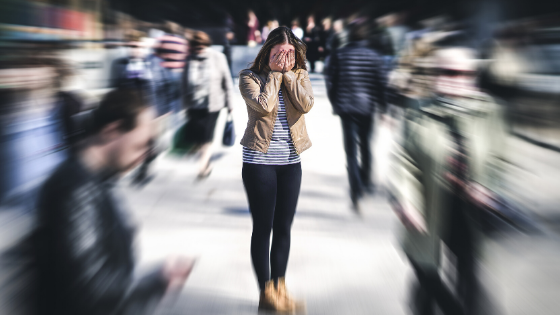
Making Friends with our Anxiety
Anxiety is a really useful, natural reaction to potentially harmful situations. When we feel we are under any threat, our heart rate and breathing rate increases, concentrating blood flow to the head – where we need it most. Our bodies also produce powerful hormones such as adrenaline and cortisol, priming us to do what we need to do to survive. We are awake, we are alert and we have more energy to enable the flight or fight responses we need to get through an attack.
“When you change the way you look at things, the things you look at change.”
Wayne Dyer
But as we know, a lot of us experience anxiety more often and more intensely than we need to, sometimes leading us to have anxiety disorders – meaning it can hit us out of nowhere for no particular reason, be too intense for the situation we are in or even be bubbling away under the surface all of the time.
Anxiety can feel different from person to person. Symptoms can be feelings of dread, a horrible pit in your stomach, heart-pounding, rapid breathing, trouble concentrating, dizziness, sweating, nausea and shaking. For people who have dealt with anxiety problems for a long period of time, it can be more like constant repetitive thoughts and worries about things that might not even happen. People with anxiety problems often find themselves catastrophizing and freaking out over worst-case scenarios, even if they’re not based on reality.
The goal for someone with anxiety seems to always be to get rid of it – to conquer it, take control and banish it forever. But in reality, many people will not be able to rid their lives of anxiety forever – having to find a way to accept and manage their symptoms in a way that is tailored specifically to their needs.
What if we can learn to look at anxiety as a visitor in our lives, recognising when it has arrived, accepting the feelings it brings with it, knowing that ‘this is a thought’ or ‘this is a feeling’ and realising that it will pass, just like all of the other times. How freeing it can feel to know that this yucky feeling is not us, it is something we must endure from time to time and manage in the way that is best for us.
“Nothing is permanent in this wicked world, not even our troubles.”
Charlie Chaplin
Now I am not suggesting that we actively invite anxiety in and let ourselves free-fall into a spiral of negative thoughts, but there is extreme comfort to be found in acceptance and then looking at anxiety for what it is – ultimately separating it from oneself and dealing with symptoms on a case by case basis.
Sarah Wilson, Australian blogger and author of the New York Times bestseller ‘first, we make the beast beautiful’, ultimately re-frames anxiety as a spiritual quest rather than a burdensome affliction and explains that accepting anxiety and discovering what it can teach you about the beauty of life, is something anyone dealing with it can do. I highly recommend this book to anyone wanting to view their anxiety in a different way.
Here are some benefits to making friends with our anxiety:
We can accept that it’s OK not to be OK
What a relief it would be to give ourselves permission to be imperfect and to make mistakes, to stop torturing ourselves after every bout of anxiety and to allow ourselves a lazy day if we need it. After all, aren’t there enough battles in our lives without picking a fight with our own subconscious?
We can give up the struggle a little
Do you remember those Chinese finger traps? They were made from a cylinder of thin woven bamboo, just large enough to fit the first finger of each hand into each end. When you attempt to remove your fingers, the cuffs tighten. The more you pull and struggle, the tighter the cuffs become. But if you go against logic and a lifetime habit of forcing something to happen and relax, then push the bamboo together again with your free fingers, your fingers a freed.
What if we can apply the same rules to moments of anxiousness – if we relax, notice the feelings and acknowledge that times will be tough for a bit. This way we can let go of the fight to stop it – as we know that isn’t effective, and save ourselves a lot of energy.
It can break the cycle
We can often get into a familiar spiral when it comes to anxiety. It can start off mild, then we notice we are worrying, then we worry that we are worrying, then we beat ourselves up about worrying too much, and the anxiety gets worse. Stopping the cycle by being more curious about our feelings, rather than trying to stop them, can put an end to the continuous loop of negative thoughts.
We can find self-acceptance
When we accept who we are and the possibility that part of who we are is an anxious person, it can stop the desperate feelings of needing to rid our lives of a part of us that is really just doing it’s damn hardest to keep us safe. Let’s love who we are – warts and all.

Thank you!
You have successfully joined our subscriber list.
leave a comment